

Kenya Wildlife Safari: Best Parks, Animals and When to Go
A Kenya wildlife safari puts you among some of the richest animal populations on Earth: lions and cheetahs on the Masai Mara plains, elephant herds beneath Mount Kilimanjaro, rhinos on the shores of Lake Nakuru, and rare northern species in Samburu. Kenya’s parks are close enough together that one trip can cover very different habitats and wildlife.
This guide explains which parks to choose for the animals you most want to see, when to go, and how to plan a Kenya wildlife safari that fits your time and budget.
Quick Answer
The best Kenya wildlife safari for first-time visitors combines the Masai Mara for big cats and the Great Migration (July to October), Amboseli for elephants with Kilimanjaro views, and Lake Nakuru for rhinos. Add Samburu for northern species such as Grevy’s zebra and reticulated giraffe, or Tsavo for vast wilderness and red-dusted elephants. Five to seven days covers three or four parks comfortably.
- The Masai Mara is Kenya’s top park for lions, leopards and cheetahs all year.
- Amboseli is famous for large elephant herds and views of Kilimanjaro.
- Lake Nakuru and Ol Pejeta are among the best places to see rhinos.
- Dry months (January to March and June to October) usually give the easiest game viewing.
Where to See Kenya’s Big Five
| Animal | Best places in Kenya | Tips |
|---|---|---|
| Lion | Masai Mara, Amboseli, Nairobi National Park | Most active early morning and late afternoon |
| Leopard | Masai Mara, Samburu, Lake Nakuru | Shy and often in trees along rivers; patience helps |
| Elephant | Amboseli, Tsavo East and West, Samburu | Amboseli herds are easy to see on open plains |
| Buffalo | Masai Mara, Lake Nakuru, Aberdare | Common in herds; old males are often alone |
| Rhino | Lake Nakuru, Ol Pejeta (Sweetwaters), Nairobi National Park | Fenced sanctuaries give the best chances |
The Best Parks for a Kenya Wildlife Safari
Masai Mara National Reserve
The Mara is Kenya’s most famous wildlife area, with open grasslands that make big cats easy to spot. Between about July and October, the Great Migration brings huge herds of wildebeest and zebra, and dramatic river crossings are possible, though never guaranteed. The resident wildlife is excellent all year. Read our guide to timing Mara River crossings, or see our 3 Days Masai Mara Budget Safari.
Amboseli National Park
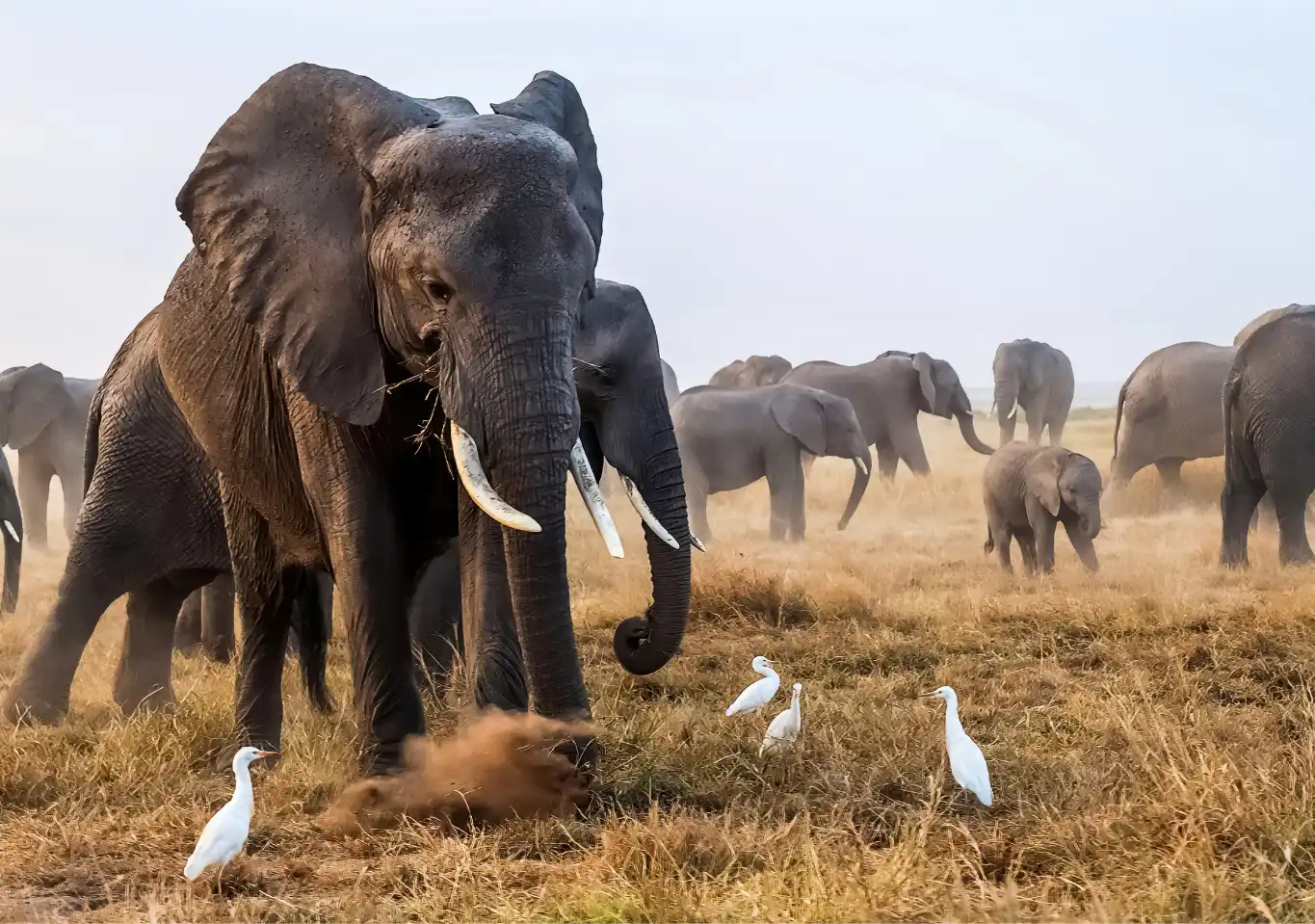
Amboseli is the place for elephants. Family herds move between the swamps and the dusty plains, often with Kilimanjaro rising behind them. The mountain is usually clearest early in the morning. Our Amboseli safari guide explains the best viewing times.
Lake Nakuru National Park
A fenced park around an alkaline lake in the Rift Valley, Lake Nakuru is one of Kenya’s best rhino sanctuaries, with both black and white rhinos. You may also see Rothschild’s giraffes, buffalo, lions and, when lake conditions suit them, flamingos. See our guide to Lake Nakuru safari packages.
Samburu National Reserve
In Kenya’s dry north, Samburu is home to the “Samburu special five”: Grevy’s zebra, reticulated giraffe, Beisa oryx, gerenuk and Somali ostrich. The Ewaso Ng’iro River draws elephants and leopards. Try our 3 Days Samburu National Reserve Private Safari.
Tsavo East and Tsavo West
Together, the Tsavo parks form one of Kenya’s largest protected areas. Tsavo East is known for elephants coated in red dust, while Tsavo West offers volcanic landscapes and springs. Tsavo combines well with a beach stay on the coast.
Nairobi National Park
Just outside the capital, Nairobi National Park has lions, rhinos, giraffes and buffalo against a backdrop of city skyscrapers. It is ideal for a half-day game drive on arrival or before a flight. See our Nairobi National Park day tour.
When to Go on a Kenya Wildlife Safari
| Season | Months | What to expect |
|---|---|---|
| Long dry season | June to October | Animals gather near water; Great Migration in the Mara from about July |
| Short rains | November to December | Green landscapes, fewer visitors, good resident wildlife |
| Short dry season | January to March | Hot and dry, excellent game viewing and good value |
| Long rains | April to May | Lush scenery and lower prices, but some muddy roads |
How Long Should a Kenya Wildlife Safari Be?
Three days is enough for a first taste of the Masai Mara. Four to six days lets you add Lake Nakuru and Amboseli, which gives you a far wider range of animals. Seven days or more allows for four parks or a remote area such as Samburu. Our 7 days safari in Kenya itinerary is a good example of a complete first trip.
Group or Private?
A group joining safari is the most affordable option: you share the vehicle and guide with other travelers on a fixed departure. A private safari costs more but lets you choose your pace, which matters for photographers and families. Compare Kenya budget safari packages with our guide to Kenya private safari tours.
Responsible Wildlife Viewing
- Stay inside the vehicle unless your guide says it is safe to get out.
- Keep your voice low and never ask the driver to go off-track or crowd animals.
- Never feed wildlife.
- Choose operators that respect park rules set by the Kenya Wildlife Service and county reserves.
Frequently Asked Questions
What is the best park for a Kenya wildlife safari?
For most first-time visitors, the Masai Mara, because it offers big cats year-round and the Great Migration from about July to October. Combine it with Amboseli and Lake Nakuru for elephants and rhinos.
Can you see the Big Five in Kenya?
Yes. Lions, elephants and buffalo are common in the major parks, and rhinos are reliably seen at Lake Nakuru and Ol Pejeta. Leopards are the hardest to find, so more days in the bush improves your chances.
When is the best time for a Kenya wildlife safari?
The dry seasons, January to March and June to October, usually offer the easiest game viewing. July to October is best for the Great Migration in the Masai Mara.
How many days do I need for a Kenya wildlife safari?
At least 3 days for the Masai Mara alone, and 5 to 7 days to include Amboseli and Lake Nakuru. Longer trips can add Samburu or Tsavo.
Is a Kenya wildlife safari safe?
Yes, when you travel with a licensed operator and follow your guide’s instructions. Stay in the vehicle during game drives and listen to safety briefings at camps.
Plan Your Kenya Wildlife Safari
Tell us which animals and parks matter most to you and we will suggest the right itinerary. Send us an inquiry, or browse our Kenya safaris.
2 thoughts on “Kenya Wildlife Safari: Best Parks, Animals and When to Go”
Add a Comment
Recent Posts

Group Joining vs Private Safari in Kenya: Which Should You Choose?

Christmas and New Year Safari in Kenya: December Travel Guide

Kenya vs Tanzania Safari: Which Is Better for Your First Trip?
All Categories
Tags
Thailand
Tanks designed for shring such a nice idea,
articlee is pleasant, thas wwhy i have reasd
it entirely xnxx
my web paage webpage, https://free.xvideosporn.cc/,
https://addlinks.pro/5BFTw